
For almost all of gambling’s history, it happened in a building. You went somewhere. You walked past people. And before you were allowed to place a bet, somebody looked at you.
Two things were being checked in that moment. The first is obvious: your age. The second is the subject of this article.
Were you in a fit state to be making this decision at all?
How it works inside a physical casino
Someone is posted at the door. You hand over ID, and while they are reading it they are also reading you, how steady you are on your feet, how clearly you speak, whether you are holding onto something. No test, no appeal. One person’s judgment, formed in about two seconds. And it does not end there, because people rarely arrive drunk, they they become intoxicated over the course of the night. Staff keep watching, and a manager can stop someone playing at any point.
What are they looking for? South Australia’s code is the most specific. A venue must take all practicable steps to stop someone gambling if:
“…their speech, balance, coordination or behaviour is noticeably affected and it is reasonable to believe that [this] is the result of the consumption of liquor or some other substance.”
Speech, balance, coordination, behavior. Four things you can read off a person from across a room in seconds.
And the responsibility lies with the venue, not the guest. Last year the Missouri Gaming Commission pursued a casino over failures that included letting an intoxicated patron onto the gaming floor. The proposed penalty was $25,000.
The laws behind it, country by country
This is not a niche rule. Versions of it have been written independently across many of the world’s regulated gambling markets.
Nevada treats it as an unsuitable method of operation to let “a person who is visibly impaired by alcohol or any other drug” play. Victoria forbids a casino from knowingly letting someone “in a state of intoxication” place a bet. France requires every casino to post a notice at the entrance barring
Notice an important detail: every version is written for a physical place. You can see it in the wording – in the casino, in a gaming area, the licensee’s facility, admission, entry.
They rarely state that limitation outright; they take it for granted, because when they were written there was nowhere else for gambling to happen.
One regulator did state that limitation outright, though, and we will get back to that later.
A rule built around being seen
The pattern is striking when you look at the provisions, because one thing runs through every single one.
Visibly impaired. Appears to be intoxicated. In a state of intoxication. En état d’ivresse. Manifestement perturbées. Justifies the suspicion. Noticeably affected.
Every one of them is a description of someone being seen.
Not measured. Not tested. Seen by a person, standing close enough to another person to form a view. The law wrote down what was already happening at the door and made it compulsory. Which worked, right up until the buildings started closing.
Sweden switched the lights off in April 2025
Casino Cosmopol in Stockholm closed permanently. Göteborg and Malmö had closed the year before, Sundsvall in 2020. Svenska Spel’s explanation was blunt: declining profitability and visitor numbers, because more and more people gamble online.
Last quarter, gambling companies licensed in Sweden turned over 7.4 billion kronor. Land-based commercial gambling made up 73 million of that, roughly one percent. The line in the table for the state casino reads zero.
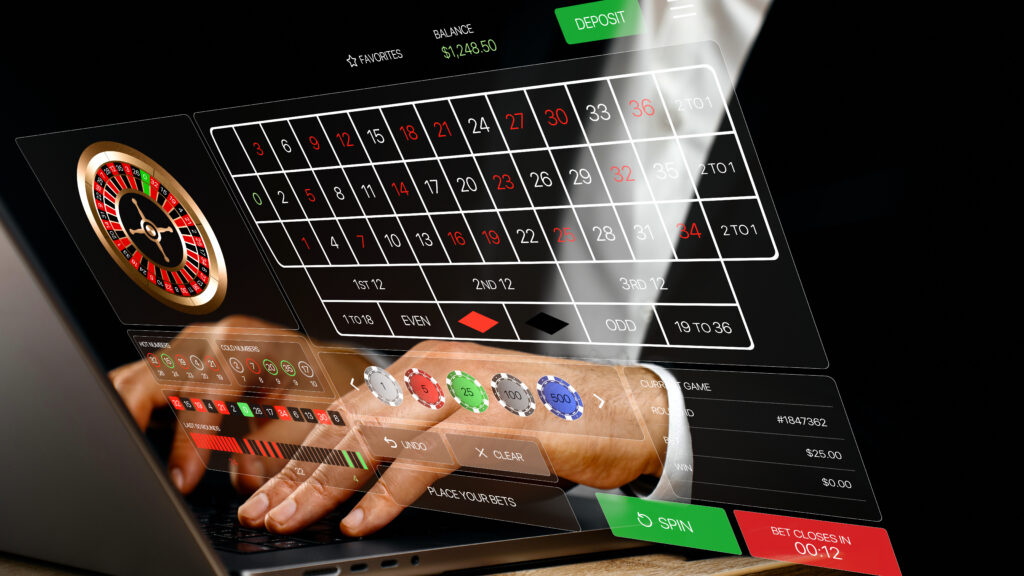
The money did not go away. It moved into a phone, in a room with nobody else in it.
So what happened to the rule against allowing intoxicated people to gamble?
What the online rules watch instead
Online player protection is real and it is taken seriously. But it focuses on something else. Britain’s regulation tells remote operators which signals to monitor: how much a customer spends, the pattern of that spending, how long they play, whether they contact support, whether they use the limit tools. Sweden’s duty of care – omsorgsplikten – requires operators to protect players from excessive gambling, and the regulator’s guidance points to chasing losses, long sessions, playing through the night, raising deposit limits, cancelling withdrawals.
Across the Netherlands, Denmark, Germany, Malta, Italy, New Jersey, Michigan, the pattern is the same: money and behavior, tracked over weeks.
None of it asks the question the person at the door asked. What state are you in right now?
New Zealand passed an entirely new online casino law this year, in force since May. Deposit limits, self-exclusion, advertising restrictions, no credit cards. It does not mention impairment either.
The point
Country after country decided that visible impairment is a reason to stop a transaction. Then the transaction moved to a phone, and every one of those sentences stopped reaching it.
Almost every one. In the Northern Territory of Australia, where most of the country’s online gambling operators hold their license, the rule was written for online too:
“Online gambling providers are to take all reasonable steps to refuse a customer and prevent a customer from gambling if suspected of being drunk or under the influence of other drugs.”
It has been in force since 2019.
Meaning: providers have a legal duty to identify a drunk customer and stop them playing. Yet all they have to go on is an account, a login, a deposit, a sequence of clicks on a screen. You cannot see a face. You cannot hear speech slurring. Balance and coordination do not travel down a network connection.
All four signals are gone. So “all reasonable steps” has, in practice, meant few if any steps, not because operators are cynical, but because nobody had a way of doing it.
Which leaves one question, and it is no longer a legal one. Speech, balance, coordination, behavior: can those be read without a person standing in the room?
Yes. And that is what has changed.
The signals a doorman read off a face in two seconds can now be measured through a screen, which turns this from a question of whether anyone can ask into a question of whether anyone will.
Sources
-
Gaming Machines Gambling Code of Practice (South Australia), cl 23
-
Nevada Gaming Commission Regulation 5.011(b)
-
Casino Control Act 1991 (Victoria), s 81AAC
-
Arrêté du 14 mai 2007 relatif à la réglementation des jeux dans les casinos (France), art. 35
-
Spielordnungsverordnung (Brandenburg), § 2 Abs. 1 Nr. 3
-
Colorado Gaming Regulations, 1 CCR 207-1, Rule 30-415
-
Missouri Gaming Commission, Disciplinary Complaint DC-25-109 (2025)
-
Svenska Spel, “Casino Cosmopol har permanent stängt”
-
Spelinspektionen, preliminär marknadsstatistik, Q2 2026
-
Gambling Commission (UK), Customer interaction guidance for remote gambling licensees, SR Code 3.4.3
-
Spellag (2018:1138) 14 kap. 1 §; Spelinspektionen, Omsorgsplikt – vägledning
-
Online Casino Gambling Act 2026 (New Zealand), in force 1 May 2026
-
NT Code of Practice for Responsible Service of Online Gambling 2019 (Northern Territory), cl 5.4